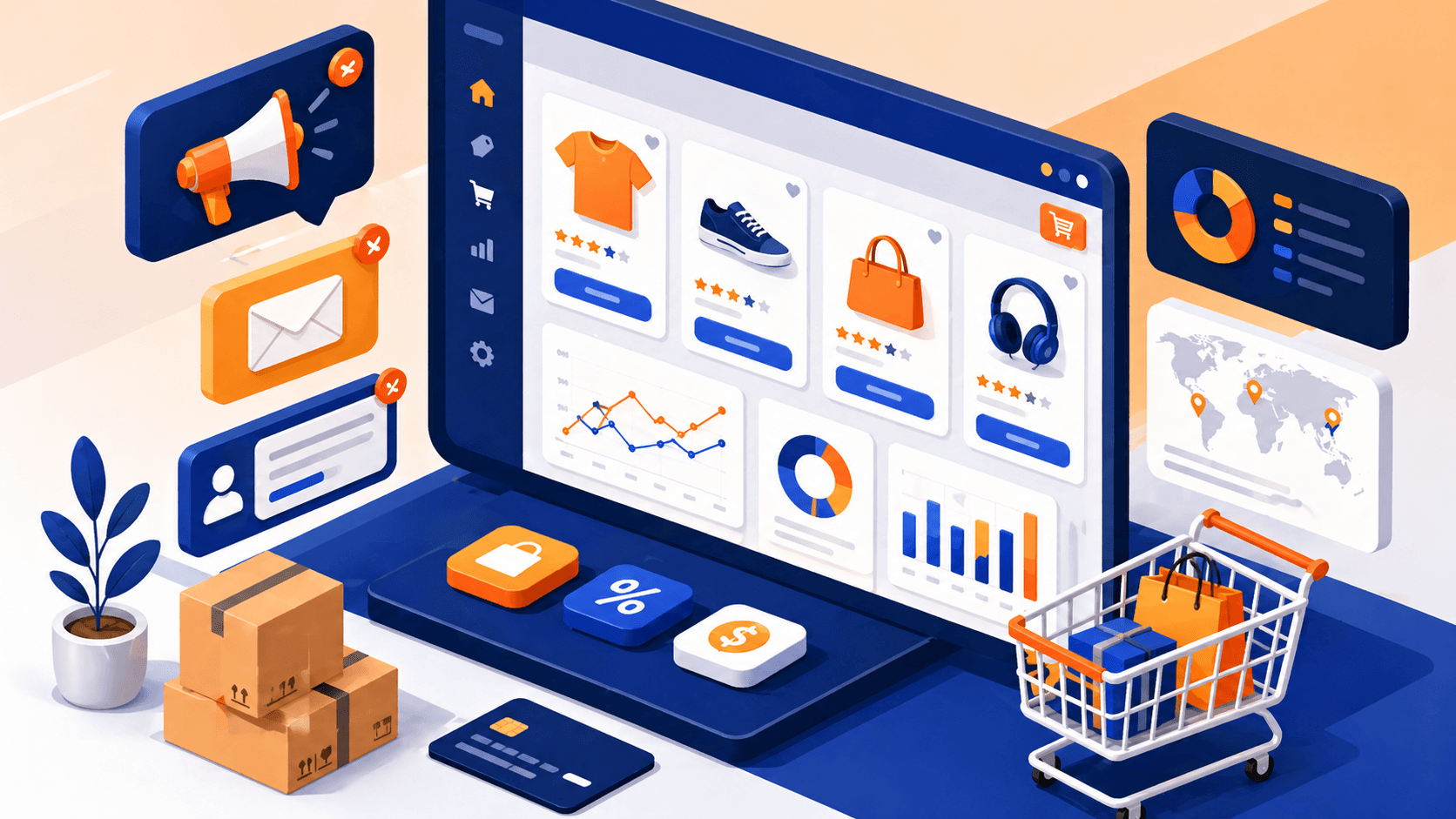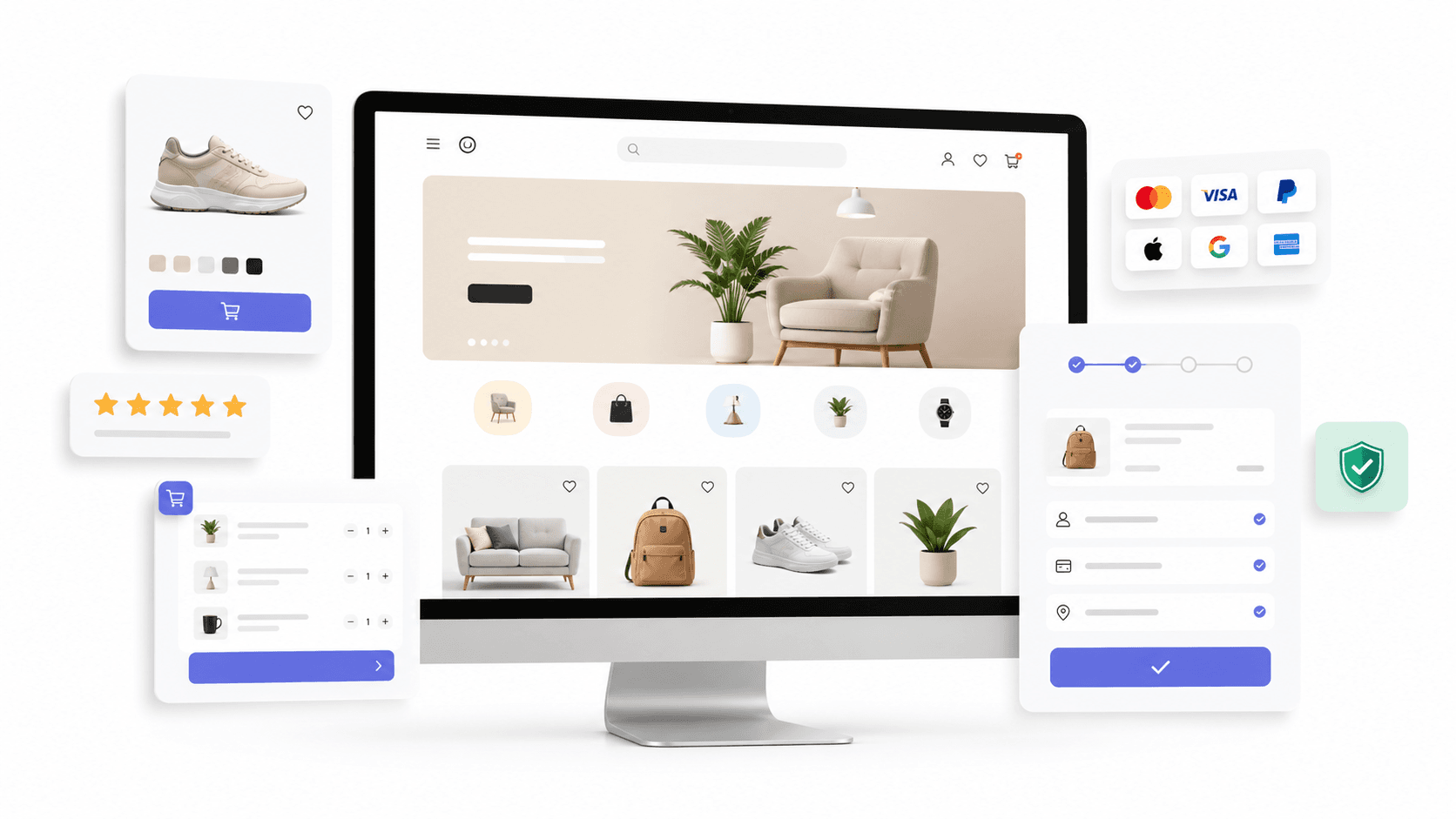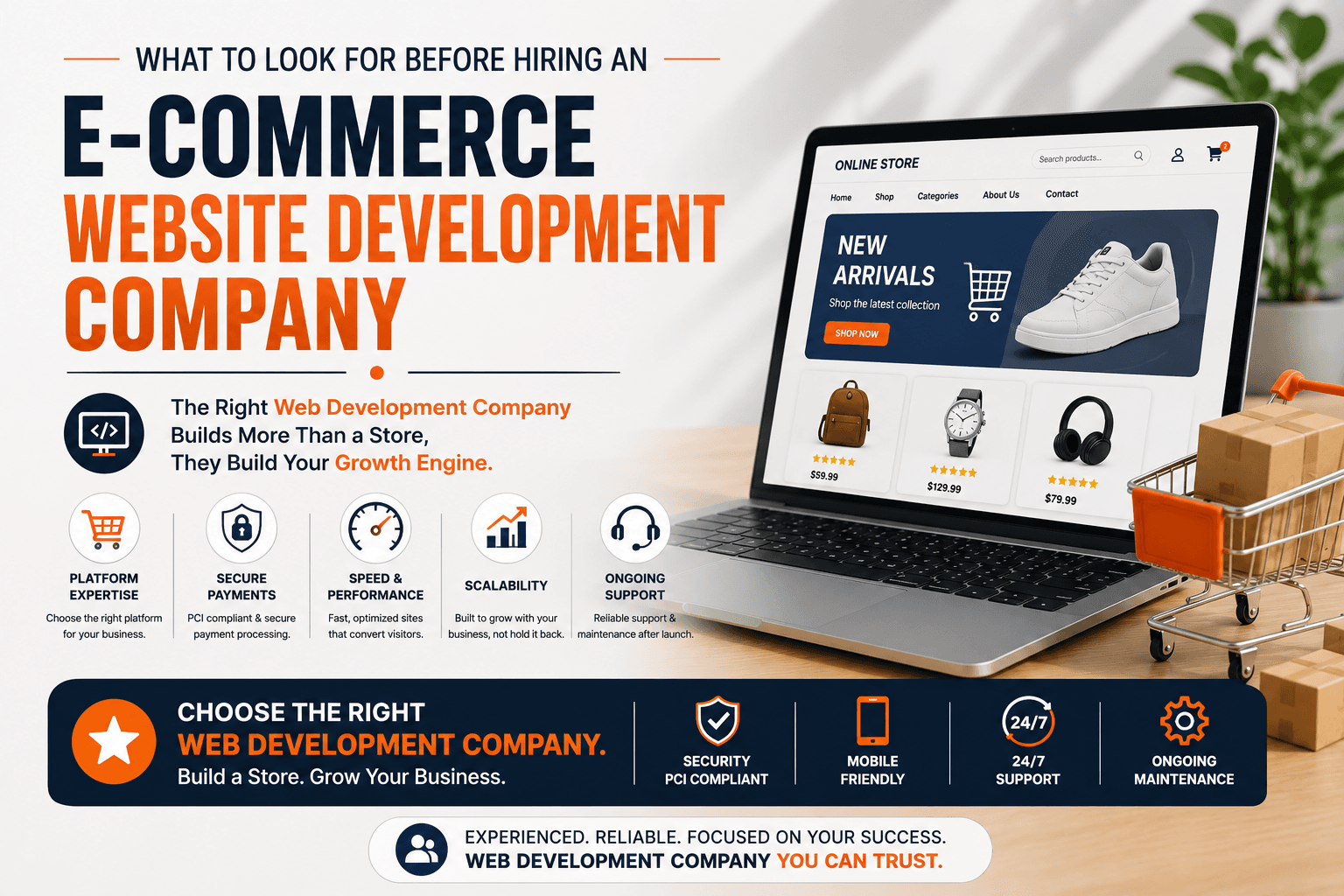
Hiring someone to build an online store is a very different decision than hiring someone to build a basic brochure website, even though both projects get lumped under the same general category of web design. An e-commerce site has to handle payments securely, manage inventory, integrate with shipping, and still load fast and convert visitors into paying customers. Get the wrong development partner and you’re not just stuck with a site that looks a little off, you’re stuck with a sales channel that doesn’t actually sell.
This is a heavily researched decision for a reason. Business owners across Canada and the US searching for e-commerce website development help are usually past the point of wanting a cheap quick fix and are looking for someone who actually understands what it takes to run a functioning online store, not just design one.
Platform Choice Comes Before Design
Before a single design decision gets made, the platform needs to be right for your business. Shopify works well for most small to mid-sized stores because of its simplicity and massive app ecosystem. WooCommerce, built on WordPress, gives more flexibility and lower ongoing fees but requires more technical maintenance. Fully custom-built platforms make sense only for businesses with unique requirements that off-the-shelf platforms can’t handle, like complex B2B pricing tiers or highly specific inventory logic. A development company that pushes you toward a platform without asking detailed questions about your product catalog, order volume, and growth plans is skipping a step that matters enormously down the line.
Payment Processing and Security Aren’t Optional Extras
Handling customer payment data comes with real compliance requirements, specifically PCI DSS standards that govern how card data is processed and stored. A development company should be able to explain clearly how payments are handled on your site, whether that’s through a hosted checkout from a processor like Stripe or Shopify Payments, or a more custom integration. If a developer seems vague or unsure when you ask about this, that’s a serious red flag worth taking seriously before signing a contract.
Page Speed Determines Whether People Actually Buy
E-commerce is uniquely sensitive to load times because every second of delay during checkout increases the chance someone abandons their cart. A site that looks beautiful but loads slowly on mobile, where a large share of online shopping now happens, will quietly bleed sales every single day without it being obvious why. Ask any potential development partner directly how they approach image optimization, hosting, and code efficiency, since these technical details affect revenue far more than most business owners initially expect.
Scalability: Building for Where You’re Going, Not Just Where You Are
A store with fifty products today might have five hundred next year, and a site built without that growth in mind often needs an expensive rebuild far sooner than it should. Ask how the proposed structure handles a larger catalog, multiple product variants, and increased traffic during sales events like Black Friday, since this is exactly when underbuilt sites tend to slow down or crash at the worst possible moment.
What US Businesses Tend to Prioritize When Hiring
US-based businesses researching e-commerce development tend to focus heavily on integration with existing tools, things like specific ERP systems, fulfillment partners such as ShipStation, and marketing platforms like Klaviyo. There’s also strong demand for multi-state sales tax handling, since US sales tax requirements vary significantly by state and incorrect setup can create real compliance headaches later.
What Canadian Businesses Tend to Prioritize When Hiring
Canadian businesses tend to ask more upfront about GST/HST handling across provinces, bilingual storefront capability for businesses serving Quebec, and whether pricing and currency display defaults to CAD without requiring the customer to manually switch. There’s also a recurring preference for working with a Canadian-based web development company in Canada specifically, partly due to time zone alignment and a better understanding of Canadian shipping carriers and tax rules.
What Happens After Launch Matters Just as Much
A lot of the comparison shopping during hiring focuses entirely on the build itself, but an e-commerce site needs ongoing attention after launch, security patches, payment gateway updates, and seasonal performance checks before high-traffic periods. Ask any potential development company what their support arrangement looks like once the site goes live, including response times for urgent issues like a broken checkout, since even a few hours of downtime during a busy sales period can cost more than a month of maintenance fees would have.
Questions Worth Asking Before You Sign
- Which platform do you recommend for my specific catalog size and growth plans, and why?
- How is payment data handled, and is the checkout PCI compliant?
- What’s your approach to page speed and mobile optimization?
- Will I own the store outright, including the ability to move hosting providers later?
Final Thoughts
An e-commerce site is closer to a piece of business infrastructure than a marketing asset, which means the hiring decision deserves more scrutiny than picking the cheapest quote or the nicest portfolio. The right development partner will ask you just as many questions as you ask them, about your products, your customers, and where the business is headed, before recommending a single technical decision.
Bernum.ca web development company in Canada builds e-commerce stores for businesses across Canada and the US with payment security, page speed, and scalability built in from the first conversation, not added on after launch.